Year: 2020
-

P3R announces partnership with Ross Initiative in Sports Equality
Originally published: Pittsburgh Business Times. July 8, 2020
P3R announced a set of new policies it will be implementing to address diversity and inclusion in the programs it hosts throughout the city, with the most notable being the annual Pittsburgh marathon.
As part of these efforts, the group will form a partnership with the Ross Initiative in Sports for Equality (RISE), which is a national nonprofit that aims to educate and empower the sports community to eliminate racial discrimination.
“Running is a great equalizer and unifying force,” Troy Schooley, P3R CEO, said in a press release. “It doesn’t matter your age, your sexual orientation, your ethnicity, how much money you make, what school you went to, what religion you practice, or who you voted for in the last election. When you’re on a P3R race course, everyone is a runner, and every step taken is a commitment to getting better. We will do everything in our power to make sure everyone feels welcome and safe participating in our sport in Pittsburgh, whether that’s at one of our events or running just for the joy of moving.”
P3R’s commitment to addressing diversity and racism was also shown with its $20,000 donation in June to four local organizations: the Pittsburgh Branch of the NAACP, Black Girls Run Pittsburgh, the Urban League of Greater Pittsburgh, and the August Wilson African American Cultural Center.
The organization also announced it would renew its focus for its Diversity, Equity, and Inclusion Committee (DEI), and offer training for all team members via partnerships with local organizations.
“We want all voices, experiences and opinions to be heard on the committee,” DEI Committee Chair Derrick Shoffner said in the release. “We know that everyone we’ve invited to join us will bring a unique perspective to help ensure that everyone who runs with us has a voice in our events and in our sport.”
-

Burgh’ers Brewing Introduces Canning Line with Release of ‘Black Is Beautiful’ Brew
Innagural canned beer to support Urban League of Greater Pittsburgh
Pittsburgh, PA (August 4, 2020) – Burgh’ers Brewing, a chef driven smash burger joint and craft brewery with restaurants in Lawrenceville and Zelienople that are focused on local, ethical, sustainable food and drink, announced today that in conjunction with the 10th anniversary of its restaurant, the Burgh’ers brewery will begin canning its beer. The inaugural canned beer release will take place alongside the debut of it’s ‘Black is Beautiful’ brew that will support the Urban League of Greater Pittsburgh (ULGP). The beer will be released on Saturday, August 8th and will be available for purchase at both Burgh’ers restaurant locations.
Black is Beautiful Beer is a collaborative effort amongst the brewing community and its customers to raise awareness for the injustices people of color face daily and raise funds for poilice brutality reform and legal defenses for those who have been wronged. Burgh’ers will donate 100% of the proceed from its ‘Black is Beautiful’ beer to the ULGP.
“Our team has been working towards the goal of canning since we opened the brewery in 2017 to give our customers access to fresh beer at their convenience, and to reach people who may not have the chance to visit our taprooms,” said Neil Glausier, Co-Owner and Brewmaster at Burgh’ers. “We can’t think of a better anniversary gift to ourselves than a canning line, or a better way to launch canned beers than in conjunction with the ‘Black is Beautiful’ initiative to support the Urban League of Greater Pittsburgh.”
Burgh’ers is committed to the long-term work of equality, and will donate 100% of its Black is Beautiful’ beer to ULGP to support its mission of enabling African Americans to secure economic self-reliance, parity and power, and civil rights.
“The Urban League of Greater Pittsburgh is excited and touched by the enthusiastic and compassionate support of Neil and his brewery,” said Esther L. Bush, President & CEO, Urban League of Greater Pittsburgh. “The Urban League continues to be a champion and advocate for social justice and racial equality. We are heartened that our mission and efforts are being amplified by organizations like Burgh’ers Brewery and we are encouraged that our commitment to the work of equality and equity for all is supported by the community. When we are all in this together, only then can Pittsburgh be a great place to live for ALL, regardless of your skin color.”
Weathered Souls Brewing Company created the Imperial Stout style base recipe for this initiative. Burgh’ers created its own version using the base recipe and adding some subtle changes.
“We added chocolate wheat, chocolate rye, and substituted some of our favorite hops for those in the original recipe,” said Glausier. “It develops to have a robust hop profile with mellow herbal bitterness and floral notes that are subdued by burnt toffee, coffee and the richest cocoa you can find with a mellow caramel note at the end in this robust, velvety ganache of a beer.”
The brewery will use an Alpha Brewing Operations beer cannon series can line capable of producing 24 cans per minute. It is a production level machine with available upgrades to grow.
“We will begin to expand many of our flagship draft selections to cans in the near future and look forward to the next expansion being local distribution,” said Glausier
For more details about the status of Burgh’ers Brewing canned beers and available retail locations, please follow Burgh’ers on Instagram @burghersbrewingpgh.
About Burgh’ers Brewing
Burgh’ers Brewing is a chef driven smash burger joint and craft brewery focused on local, ethical, sustainable food and drink. Founded by Entrepreneur and Chef Fiore Moletz, and co-owned with Brewmaster Neil Glausier, Burgh’ers serves healthy high quality food and craft brews in a welcoming environment, and aims to help strengthen and support the community by buying local and building relationships with surrounding business.About Urban League of Greater Pittsburgh
Ranked for more than a decade as one of the nation’s highest performing affiliates, the Urban League of Greater Pittsburgh was founded in 1918 with the shared National Urban League mission of enabling African-Americans to secure economic self-reliance, parity and power, and civil rights. Helping more than 20,000 individuals of all races and walks of life last year alone, the Pittsburgh Urban League helps others to help themselves through extra-curricular educational opportunities, health advocacy, housing counseling, parental education and support for early childhood and youth development, hunger prevention services, sustainable wage career preparation, and other programs that lead to improved ability to achieve economic empowerment and self-reliance. For more information visit www.ulpgh.org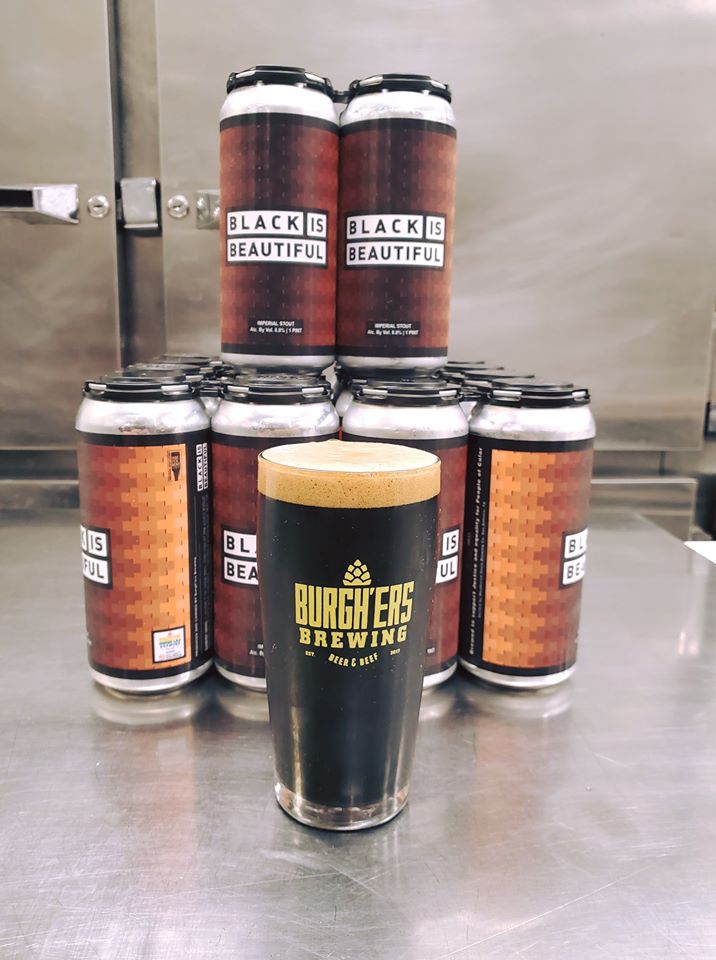
-
Burgh’ers Brewery creates ‘Black is Beautiful’ beer, helps Urban League
Originally published: Trib Live. August 8, 2020
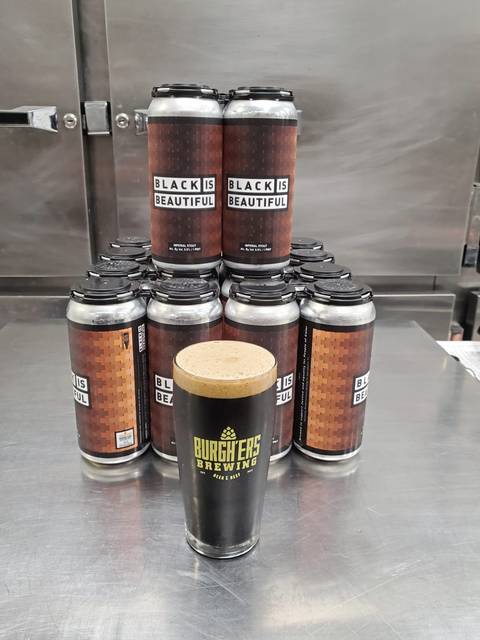
https://triblive.com/local/pittsburgh-allegheny/burghers-brewery-creates-black-is-beautiful-beer-helps-urban-league/The beer can reads: “Brewed to support justice and equality for people of color.”
“I have been around a long time and I have seen a lot of things but I have never seen anything this strong on a product,” said Esther Bush, president and CEO of the Urban League of Greater Pittsburgh. “Burgh’ers Brewing wants to make a statement publicly to all of their customers this is something they care about.”
Bush was referring to a beer can she saw at Burgh’ers Brewing, a burger joint and craft brewery with restaurants in Lawrenceville and Zelienople.
The new brew will be released Saturday at both locations and is part of the national Black is Beautiful campaign in the beer brewing community. The effort aims to raise awareness for the injustices people of color face, while raising money for police brutality reform and people who need help with legal fees.
The beer’s base recipe as an imperial stout was created by Weathered Souls Brewing Co. in San Antonio, Texas.
Burgh’ers brew has a “mellow herbal bitterness and floral notes that are subdued by burnt toffee, coffee and the richest cocoa you can find with a mellow caramel note at the end in this robust, velvety ganache of a beer,” according to co-owner Neil Glausier.
More than 1,000 breweries in 50 states and 20 countries are taking part in the campaign. Locally, Couch Brewery in East Liberty, Abjuration Brewing in McKees Rocks and First Sip Brew Box teamed up for a brew. Many others have joined in: 11th Hour Brewing and Cinderlands Beer Co. in Lawrenceville, Butler Brew Works in Butler, East End Brewing Co. in Larimer, Hop Farm Brewing in Lawrenceville, Union Brothers Brewing in Harmony, Noble Stein Brewing Company in Indiana, Hitchhiker Brewing Co. in Sharpsburg, and Inner Groove Brewing in Verona. Each is choosing a different organization to benefit.
Burgh’ers, founded by chef Fiore Moletz, and co-owned with brewmaster Glausier, and his wife Jill, of Brighton Heights, chose the Urban League as the recipient of proceeds from sale of the beer.
“This unfortunate period we are living in now and that unfortunate murder that brought us to this place has inspired me to see a cross-section of Americans embrace and try to have a fuller understanding of what the African American community and other communities of color experiences in the United States,” Bush said.
The Urban League helps African-Americans with education, health advocacy, housing counseling, support for early childhood and youth development, hunger prevention and career preparation.
“We wanted the money to go to something bigger than us,” Neil Glausier said.
Neil Glausier spent the early part of the week working on the first-ever canned beer at Burgh’ers.
Burgh’ers Brewing, a burger joint and craft brewery with restaurants in Lawrenceville and Zelienople has begun canning its beer for the debut of its “Black is Beautiful” brew. The brewery is using an Alpha Brewing Operations beer cannon series can line capable of producing 24 cans per minute. It will be released Aug. 8He canned 20 cases. The canned beer will be unveiled in conjunction with the restaurant’s 10th anniversary.
“It was a labor of love,” Neil Glausier said. “I wanted this to be the first batch because of the Urban League’s mission.”
-

For Black female leaders in Pittsburgh, Kamala Harris’ fight feels familiar
Originally published: 8/14/2020.
Pittsburgh Post Gazette
Reporter: Alexis JohnsonKathi Elliott is very familiar with stories of history-making Black women.
Her mother, Gwen Elliott, founded the North Side women’s advocacy group Gwen’s Girls nearly 30 years after she became one of the first Black police officers in the city of Pittsburgh. Gwen Elliott eventually went on to become the first woman promoted to sergeant and then first Black female commander during her tenure with the police.
Kathi Elliott said she thought of her late mother immediately following Tuesday’s announcement from presidential candidate and former Vice President Joe Biden that he had chosen Sen. Kamala Harris, D-Calif., as his running mate. Ms. Harris marked a first of her own becoming the only Black woman to ever be named on a major party’s presidential ticket.
The importance of this moment was far from lost upon Ms. Elliott, who runs her mother’s organization. She has been reflecting upon what Ms. Harris’ representation means for young girls in the Gwen’s Girls programs.
“We always have our parents and mentors tell us we can be what we want to be,” Ms. Elliott said Thursday. “But we know that on a real level, there are barriers and systemic issues that prevent us from being able to be what we want to be. So this is a step in the right direction for a woman of color to be a part of leadership to hopefully change the trajectory of our nation.”
Gwen’s Girls honored Black Women’s Equal Pay Day on Thursday, and Ms. Elliott said Ms. Harris’ presumptive vice presidential candidacy is reflective of how Black women are consistently battling to prove their worth and value in this country.
In the 48 hours after Mr. Biden’s declaration, Ms. Harris has faced criticism from some voters and constituents about her record — as California’s attorney general and as district attorney in San Francisco — during a time of unrest surrounding law enforcement and criminal justice reform.
But beyond that, the Oakland, Calif., native — born to an Indian mother and Jamaican father and who identifies as Black — is already facing birther questions from President Donald Trump’s campaign while also having her ethnic identity littered with public commentary about what her true race is.
Barbara Johnson, director of race and gender equity at YWCA of Greater Pittsburgh, said for her, these challenges that Ms. Harris faces make her all the more relatable.
Ms. Johnson’s parents are both Jamaican born, and as someone who spent her career focusing on racial justice education and advocacy, she understands the nuance in the experience of being Black but not considered African American.
“I have a Jamaican background, so I was excited about [Ms. Harris] because I relate to her,” she said. “My experience in America with a Jamaican background is that it’s kind of depleted. No one ever asks me what my ethnic heritage is. There is always an assumption that I am an African American.”
Ms. Johnson empathized with Ms. Harris and said while the senator’s mixed race may contribute to questions surrounding her Blackness, she is glad that a woman with that specific background is now at the forefront of the discussion that may help to educate people on the intersectionalities of race and ethnicity.
“For me it was really exciting because when I got to be older and started to learn more about my own history and heritage from relatives, then I was more able to embrace it. It’s hard to embrace a culture when no one around you has any concept of what you are talking about except your inner-circle family,” Ms. Johnson said.
Race and policies aside, Mr. Trump and his campaign have also made attacks on Ms. Harris’ character since Mr. Biden’s announcement. Mr. Trump called in to Maria Bartiromo’s show on the Fox Business Network Thursday morning for an interview in which he referred to Ms. Harris as a “mad woman.” Mr. Trump also said Ms. Harris was “angry” during her questioning of Supreme Court Justice Brett Kavanaugh during his confirmation hearings.
The president’s comments have come under fire from Democratic Party members and social media users alike who called his words racist and misogynistic.
For Cheryl Hall-Russell, former chief executive of the Hill House Association and founder of Black Women, Wise Women, Mr. Trump’s “angry Black woman” narrative is one that she looks to combat through her daily work.
Ms. Hall-Russell’s doctoral studies focused on intersectional leadership and the experiences of Black women in executive leadership roles. Her professional career eventually led her to start BW3 in 2017, an agency that offers diversity, equity and inclusion training in corporate settings throughout Pittsburgh.
The Indianapolis native called Mr. Trump’s remarks “not creative and incredibly predictable,” while arguing that her research over the last few decades shows Black women are often scrutinized at higher levels than their peers.
“There are no mistakes that can be forgiven. There is no wiggle room. Our smallest mistakes become massive. Our big mistakes become insurmountable,” Ms. Hall-Russell said. “[Ms. Harris’] work ethic is very emblematic of Black women because if we’ve gotten that far, we had to go above and beyond or we never would have been allowed in these positions. So we have to be super smart, very talented and have some kind of broad appeal, or we never get to where she is now.”
Ms. Hall-Russell said she was elated to use Ms. Harris’ story as a teaching moment for her 17-year-old daughter as they have personal discussions about what it means to be a Black woman in America.
“I love being able to tell my daughter that Kamala Harris is now a vice presidential candidate. I love talking to her about different shades of Black women. I love having an intelligent exchange with her about what this meant and warning her about the red herrings that will be thrown her way,” she said. “I told her to watch and look because her path is also going to be littered
with all types of sharp objects in her way too. As a Black woman, she is going to learn how to deal with the fact that she is beautiful and strong and smart and she is going to be ready for the challenges that come with that. I am able to use this moment to educate her on that.”
Longtime Urban League of Greater Pittsburgh president and CEO Esther Bush said that as a Black woman, she was excited that Mr. Biden kept his promise to choose a woman of color as his running mate, but her support for Ms. Harris goes beyond race.
“Kamala Harris 100% deserves this nomination. Not because she is a woman. Not because she is a woman of color. She deserves this nomination because she is a proven professional: qualified and experienced. Her previous professional positions underscore her intelligence and commitment to the citizenry,” Ms. Bush said in an emailed statement Thursday.
Ms. Bush, who has served on the state Board of Education, Law Enforcement and Community Relations Task Force, and the Voting Modernization Task Force among other committees, said that while she hopes Ms. Harris helps to motivate women of color to go after goals they may have thought were unobtainable, she realizes the work that is still left to do to combat systemic racism and inequality in America.
“Just as the nomination and election of President [Barack] Obama did not end systemic racism, Senator Harris’ role as vice presidential candidate or vice president will not be the end of systemic racism,” Ms. Bush said. “That work relies on each of us individually. It takes local actions, decisions and intentionality to untwine the long and deeply entrenched vines of structural racism. It is up to [us] to make the difference.”
Kathi Elliott agrees that Ms. Harris’ nomination is a step in the right direction. She said her focus through the work of Gwen’s Girls looks to continue to reinforce what Ms. Harris represents for women of color.
“We have to change the narrative and image of how people see Black women and girls, and that is the mission of Gwen’s Girls. And I am hoping that Biden’s pick of Kamala Harris will help to do that as well.”
The Associated Press contributed.
Alexis Johnson: ajohnson@post-gazette.com and Twitter @alexisjreports.
-
Why Pennsylvania is ground zero for mail-in voting debate
Why Pennsylvania is ground zero for mail-in voting debate
Originally published: 9/4/2020. The Christian Science Monitor. By: Christa Case Bryant, Staff writer
The phone is ringing nonstop in Pennsylvania’s Lycoming County.
“Did the November election get delayed?”
“Can I still vote by mail?”
“Why did my wife, who died in 2011, get an application for an absentee ballot with her name and address already filled in?”
It’s the last category that drives county election director Forrest Lehman and his staff especially batty. Various groups, in an apparent bid to boost voter participation, are sending out a tsunami of pre-filled ballot applications based on voter data that is years out of date. And they have Mr. Lehman’s name on the return label.
“Their first reaction is to call us and ask, ‘What kind of Mickey Mouse operation are you running?’” he says, comparing it to a denial of service attack, which disables a website by flooding it with traffic. “We can’t get anything else done. … Applications are just piling up while we answer questions.”
Across the country, as states are racing to prepare for holding a high-stakes presidential election amid a pandemic, swing states are coming under particular scrutiny. The tighter the race, the more possible it is that the election could be tipped by a relatively small number of voters who are unable to vote or whose ballots are delayed or disqualified. With a disproportionate number of mailed votes coming from Democrats and studies showing that minority voters experience higher rates of disqualification, such rejections could tip the presidential race to the Republicans.
Even among the swing states for whom widespread voting by mail is uncharted territory, Pennsylvania stands out. Leading up to this year’s June primary, the state enacted its most sweeping legislation on election administration in 80 years and overhauled voting systems in all 67 counties. Then the pandemic hit, driving a 17-fold increase in mail-in ballots, overwhelming local election officials. It took two weeks to certify all the races and more than 37,000 absentee ballots were rejected – not far off from the 44,292 votes by which Donald Trump won the state in 2016, propelling him to the White House. New polls show Mr. Biden’s lead shrinking to less than the margin of error, indicating a statistical tie with two months to go.
No one wants to be the Florida of 2020 – the one state that the country is waiting on for weeks to determine the results of a contested presidential election. In Pennsylvania, a wide array of officials from local election directors like Mr. Lehman up to Democratic state executives like Gov. Tom Wolf and Secretary of State Kathy Boockvar and the Republican-led legislature are working around the clock to ensure that Pennsylvania’s vote is fair, safe, and secure – with clear and prompt results.
While Pennsylvania’s June primary raised concerns about the state’s ability to handle a greater influx of mailed ballots, some say it may in fact have helped build the state’s electoral muscles for a heavier lift this fall.
“We were learning on the fly from February to June,” says Jeff Greenburg, the director of elections in Mercer County until August, when he stepped down to work for The National Vote at Home Institute. “I really think Pennsylvania is in a better position now. … To me we have a much better chance of succeeding because we now know what to do.”
Maximizing voter access while ensuring a secure vote
Pennsylvania was the first state to extend absentee voting to soldiers, before the deployment of thousands of troops to the Civil War caused other states to follow suit during the 1864 presidential election. Last fall, the state expanded the opportunity for voting by mail through Act 77, which introduced “no-excuse” absentee voting, created a 50-day window for voting by mail, and extended the deadline for registering and submitting one’s ballot.
When the pandemic hit, the state was better prepared to accommodate voters concerned about voting in person. But it also accelerated implementation, taxing election staff and raising concerns about everything from denying people the opportunity to vote to diluting legitimate votes through uneven interpretation of election laws and policies among the counties. The challenge is how best to maximize voter access while ensuring the safety of voters and the security of the voting process, and there are partisan differences over how to strike the right balance.
Following Pennsylvania’s primary, the Trump campaign and Republican National Committee (RNC) launched a lawsuit demanding a uniform interpretation of the state’s election code to guard against abuse and fraud, including through unattended ballot drop boxes that were used in more than a dozen counties.
“Our right to vote is one of the most important, if not the most important, right bestowed upon us,” says Republican Rep. Guy Reschenthaler, a plaintiff in the case who served with the Navy in Iraq and says he was proud to fight to protect the right of everyone to vote, regardless of political leaning. In an emailed response to questions, he says a consistent application of the law is the key to ensuring a fair and equal election. “Treating certain areas of the commonwealth differently is an inherent risk to the integrity of our important tradition of making sure every vote counts, and every vote counts equally.”
Many Democrats are also worried about every vote counting, particularly when it comes to minority voters. A lawsuit brought by the League of Women Voters demands that Pennsylvania establish a standardized procedure for verifying voter signatures and to join 17 other states that allow voters whose mailed ballots are invalidated for mismatched signatures to be notified and given a chance to “cure” their ballots by verifying their identity.
The case notes that county staff untrained in handwriting analysis are often the ones to throw out ballots based on a signature mismatch, which can disproportionately affect voters who are disabled, elderly, or less educated. The suit cites a study that found that laypeople misidentify genuine signatures as inauthentic 26% of the time.
Another issue that disproportionately affected minority voters in Pennsylvania’s primary was the consolidation of polling places, driven in part by polling worker shortages during the pandemic. The two most populous counties – Philadelphia and Allegheny, which includes Pittsburgh – downsized from 2,100 polling stations to fewer than 500, leading to long lines. African Americans make up nearly half of Philadelphia’s population and nearly a quarter of Pittsburgh’s.
“I think absolutely this is intentional,” says Celina Stewart, senior director of advocacy and litigation for the League of Women Voters. “It’s a voter suppression tactic.”
“Voter suppression hasn’t gone away,” she adds. “Voter suppression just changes its face based on what’s going on.”
The drop box debate
Esther Bush, president and CEO of the Urban League of Greater Pittsburgh, which is also party to the League of Women Voters suit, cites many previous hurdles Black voters have had to overcome – including election officials in the South asking Black voters to guess the number of jellybeans in a jar, and only allowing them to vote if they guessed correctly.
Now, amid national protests over racial injustice, a pandemic that has disproportionately affected Black communities, and an unusual election season that has stirred concerns about Black voters’ voices being heard, someone asked Ms. Bush recently, “What else can Black people take? What else is America going to put on us?”
“And I said, if you look at our history, we have handled and managed all of the unfairness that has been put on our shoulders,” says Ms. Bush, whose organization is working with partners to get out the vote in Pittsburgh. “We will get through this as well.”
One option to support Black voters and others looking to avoid long lines, close contact, or mail delays is installing secure ballot drop boxes, which are bolted to the ground and routinely emptied.
“We strongly encourage counties to … make voting as accessible as possible,” including by using drop boxes, Ms. Boockvar, Pennsylvania’s secretary of state, said in an interview. “Do I have the authority to mandate that? I don’t at this time.”
So it’s up to each county to decide whether to use them, how many to deploy, where to place them, and how to monitor them and establish a chain of custody. Amber McReynolds, CEO for The National Vote at Home Institute and the former director of elections for Denver, says the best practice is to have a bipartisan team that’s specifically trained on emptying the boxes and does so on a regular schedule, putting the ballots into sealed boxes and maintaining a chain of custody.
Erie County was one of more than a dozen Pennsylvania counties to utilize the drop box option, installing one at the courthouse where there was lighting and 24-hour surveillance. Chief Clerk Doug Smith says the county was expecting about 8,000 people to vote absentee. Instead it was more than triple that, and about 5,000 ballots came via that single drop box.
Now the use of drop boxes is up in the air due to the Trump lawsuit, which has been suspended until early October pending related litigation on the state level.
The state’s election code requires that each voter deliver his or her own ballot, and the Trump lawsuit argues that unattended drop boxes contravene that provision, since it’s impossible to verify who dropped off the ballots. Local election officials also worry that the boxes could become a political target and the ballots damaged – an irretrievable loss even if the boxes are under constant surveillance and the culprit is identified.
As for concerns about fraud, the number of proven instances remains extremely small and the plaintiffs in the Trump lawsuit were not able to produce any examples from this year’s primary when asked by the federal judge overseeing the case. However, the suit cited examples from the past, including a 1993 special election in Philadelphia that was closely scrutinized because it determined which party would control the state legislature. A federal judge found “massive absentee ballot fraud, deception, intimidation, harassment and forgery” on the part of the victorious Democratic candidate, who was forced to relinquish his seat to his Republican opponent. According to a front-page article in The New York Times, two of the three members of the Board of Elections – both Democrats – “testified that they were aware of the voter fraud, had intentionally failed to enforce the election law and had later tried to conceal their activities by hurriedly certifying the Democratic candidate as the winner.”
“The RNC and Trump campaign continue our fight to protect ballot security and reduce chances for fraud and administrative chaos in November by ensuring campaigns can fairly monitor the casting, collecting and counting of votes,” says Mandi Merritt, national press secretary for the Republican National Committee, in an email. “All voters, regardless of political stripes, deserve to have confidence in their elections system and this lawsuit seeks to restore that integrity.”
Democrats accuse Mr. Trump of making unsubstantiated claims about the potential for widespread fraud to sow doubt about the integrity of the election, and prepare the ground for contesting the results if he doesn’t win.
“The Biden campaign will fight for every Pennsylvanian to make their voice heard this fall, and we’re making sure voters know all of their options to vote: whether it’s by dropping their ballot off at a secure dropbox, voting by mail, or safely in-person,” says Michael Feldman, Pennsylvania communications director for the Biden campaign, in an email to the Monitor.
Secretary Boockvar says in an interview that the greatest challenge leading up to November is the misinformation and disinformation around the voting process. To that end, Pennsylvania has just started a postcard campaign, informing registered voters of their right to vote by mail or in person and pointing them to VotesPA.com, the official hub for election information. In addition, a state interagency group that includes everyone from the police to the inspector general to the Department of State is working to combat false information on social media, and ensure that counties have the knowledge and resources to do so as well. Similar initiatives are in place in the cybersecurity domain.
“One of the reasons why I’m really proud and confident in Pennsylvania’s election security and preparedness for the November election is because of the strength of those collaborations,” says Secretary Boockvar.
State legislature proposes last-minute changes
In the June primary, 1.5 million Pennsylvanians cast their ballot by mail and it took two weeks to certify all the elections. In at least one race, the apparent winner on election night ended up losing. Some are concerned that could happen in the November presidential election. With far more Democrats planning to vote by mail than Republicans – 52% compared to 10%, according to a Franklin & Marshall College poll – that could create a “blue shift” after polls close and mailed ballots are counted.
“In a primary, in a [state government] office, it’s an inconvenience – it’s not the end of the world,” says Dave Reed, former Republican majority leader in the Pennsylvania House of Representatives, who now co-chairs VoteSafe PA, a cross-partisan coalition working to ensure a safe and secure election. “When you’re talking about who’s going to be the next president of the United States, we have to be thorough and prompt.”
Secretary Boockvar says she’s expecting about 3 million people to vote by mail in November. A new bill put forward by the GOP-led state Senate incorporates a number of recommendations her office made in an August report on the primary, one of which would be to facilitate quicker results by allowing local election officials to start opening mailed ballots and preparing them for scanning prior to Election Day. Current state law prohibits doing so before 7 a.m. on Election Day.
The bill would also allow voters to request ballots earlier and “cure” their ballots in case of a signature mismatch – a practice used in 17 other states by which voters whose ballots were invalidated are notified and given a chance to verify their authenticity.
“The overwhelming and the overriding goal with this [bill] is to ensure security of the elections, access for voters, and to ensure that we get timely results on election day or shortly after election day – that we’re not looking for weeks afterwards to know what the final results will be,” says Crystal Clark, general counsel to the Senate Republican caucus.
Such changes would ease the Election Day crunch, but it creates uncertainty right now for local election officials, by holding up the printing of ballots, poll worker training manuals, and other delays.
“We certainly recognize that there is an urgency with regard to the changes that are in Senate Bill 10,” says Ms. Clark.
The Senate is scheduled to reconvene on Sept. 8 and Mr. Reed, the former Republican majority leader, says the bill could be wrapped up within a week if the parties stick to key needs. He’s reasonably optimistic Pennsylvania will manage to pull off the election without any major hitches. After all, it’s more of a 20th-century upgrade than a digital revolution, he says.
“This is not text-your-vote-in, this is not Snapchat; we’re using a mail system,” he says.
But perhaps beyond the legal and logistical challenges is a deeper issue of trust – in the system itself, the people administering it, and even of fellow voters.
“The challenge is going to be making sure that we as a people – we have to understand and believe that we have a greater purpose than just ourselves, and that we have to do everything we can to exuberate love and concern for our fellow human beings,” says Kenneth Huston, president of the Pennsylvania state NAACP who also serves as a pastor. “Somewhere along the lines we’re losing that. And what’s very troubling to me is that people who live in communities in the rural areas, I don’t want them to think that because I’m a Black civil rights leader, I don’t care about them, because I do.”
In more than a dozen interviews for this piece, a wide range of people across the political spectrum emphasized a common desire for a fair and secure election. And the people most well-equipped to ensure that, argues Mr. Lehman of Lycoming County, are the dedicated local election officials across the state.
“They’re probably the best asset this state has to maintain the integrity of election,” he says. “It’s not the election code or the 1s and 0s in the software, it’s having people of integrity in the positions that matter. That’s how you protect this process.”
-
Judge Rules That Census Must Not be Rushed; Victory for Civil Rights Groups, Civic Organizations, and Local Governments
By National Urban League
Published 09 AM EDT, Fri Sep 25, 2020SAN JOSE, Calif. — The U.S. District Court for the Northern District of California last night issued an order blocking the Trump administration’s attempts to rush the 2020 Census to a close while a legal challenge to that plan plays out in the courts. The court’s order preliminarily enjoins the Census Bureau and Secretary of Commerce from using a September 30, 2020 deadline for the completion of data collection and a December 31, 2020 deadline for processing and then reporting the census count to the President. Under the Court’s Order, the census count will continue through October 31, as the Census Bureau had earlier planned, and its data processing will continue under a timeline that allows for a full, fair and accurate overall tabulation and reporting of the total population to the President..
District Judge Lucy H. Koh issued her ruling after a hearing Tuesday afternoon in National Urban League et al. v. Wilbur L. Ross Jr. et al., the lawsuit filed by civil rights groups, civil organizations, and tribal and local governments on August 18 to block the administration’s attempt to rush census operations to a close by September 30 and send population numbers for apportionment to the President by December 31. The plaintiffs sought to stop the Trump administration’s plan to force the Census Bureau to shorten the 2020 count against the judgment of the bureau’s own expert staff and in the middle of a pandemic.
The court had already issued a temporary restraining order to prevent the administration from shutting down its census operations while the court prepared the ruling it issued today.
The plaintiffs in the lawsuit are membership and advocacy organizations, counties, cities, federally-recognized Indian tribes, and individuals whose communities will be underrepresented in the final census count if the administration succeeds in ending the 2020 Census data collection and processing prematurely. The plaintiffs are the National Urban League, the National Association for the Advancement of Colored People, Black Alliance for Just Immigration, the League of Women Voters, the Navajo Nation, Gila River Indian Community, Harris County in Texas, Commissioners Rodney Ellis and Adrian Garcia of the Harris County Commissioners Court, King County in Washington, the city and county of Los Angeles, the cities of San Jose and Salinas (California) and the City of Chicago, Illinois.
The plaintiffs are represented by the Brennan Center for Justice at NYU Law, the Lawyers’ Committee for Civil Rights Under Law, Latham & Watkins, LLP, Public Counsel, Navajo Nation Department of Justice, the Office of the Los Angeles City Attorney, the Office of the Salinas City Attorney, Edelson P.C., the Corporation Counsel for the City of Chicago, Akin Gump Strauss Hauer & Feld LLP, and Holland & Knight LLP.
The Covid-19 pandemic posed new challenges to the decennial census, including massive displacements of people, just as the count was getting underway. It upended all census field operations and undermined outreach to populations that the bureau has long struggled to count, including racial and ethnic minorities, non-English speakers, and undocumented persons.
Bureau officials requested an extension of census data collection, processing, and reporting deadlines to accommodate a Covid-19 plan that President Trump publicly supported, and spent multiple months acting on that plan. But on August 3, Commerce Secretary Wilbur L. Ross and Census Bureau Director Steven Dillingham abruptly announced that the data-collection would stop on September 30, a full month short of the time census officials had previously said was necessary to complete the count.
The lawsuit argues that the Trump administration’s new, accelerated census timeline cuts a crucial four weeks from the actual count and four months from the time for processing and reporting the data used to apportion the U.S. House of Representatives. The abrupt change disregards the bureau’s own plans for dealing with the hardships imposed by the Covid-19 pandemic. It will also undermine the quality and accuracy of the census as well as produce a massive undercount of communities of color.
The lawsuit argues that the administration’s attempts to rush the census to a close pose a grave threat to the vital functions that rely on census data, from reapportioning the House of Representatives and redrawing state and local electoral districts to equitably distributing over $1.5 trillion annually in federal funds that support basic needs like education, food, and health care.
The lawsuit seeks to have the court declare the decision to scuttle the census Covid-19 plan unlawful because it violates the Administrative Procedure Act as well as the Enumeration Clause and the Fourteenth Amendment of the Constitution.
The suit asks the court to keep the 2020 Census on the schedule proposed by census officials in April in response to Covid-19. Under that plan, the bureau would complete the census, including door-knocking, by October 31, 2020, and deliver apportionment numbers to the president by April 30, 2021. Redistricting data would be reported to the states by July 31, 2021.
For the ruling, please click here.
The following comments are from:
Marc H. Morial, President and CEO, National Urban League
“The court’s decision affirms our contention that changes to the census schedule will irreparably harm the integrity of the 2020 Census and result in a devastating undercount of vulnerable communities. Career officials at the Census Bureau opposed the shortened schedule precisely for these reasons, and to avoid the perception of political manipulation, and we are confident that integrity and equity will win out over the partisan vandalism that threatens our democracy.”
Jonathan Nez, President, Navajo Nation
“We have a strong and diverse coalition of plaintiffs who are demanding that the U.S. Census Bureau uphold their original plan to allow the census count to continue through the month of October. The coronavirus pandemic has set all of us back and created many challenges to get people counted, especially for rural areas such as the Navajo Nation. Today’s ruling should be respected to allow the census count to continue without disruption.”
Derrick Johnson, President and CEO, National Association for the Advancement of Colored People
“In the face of a global pandemic, the last thing we should consider is cutting short the decennial census that has long-lasting repercussions on the well-being, health, and livelihood of so many Americans. The decision to continue the census will ensure proper attention is given to overlooked and unreported areas that need to be counted the most.”
Nana Gyamfi, Executive Director, Black Alliance for Just Immigration
“We are pleased with the court’s ruling, affirming what we already know – every person counts and must be counted in this 2020 census. For the Black community, this decision means we have extra time to claim the governmental resources and representation that we’ve been denied. We look forward to continuing the important work of making sure our community members are counted by the census deadline.”
Stephen Roe Lewis, Governor, Gila River Indian Community
“The decision by the Commerce Department to abruptly cut off counting would have dramatically compounded the historic issue of undercounting in Indian Country. I couldn’t be more pleased that the court has put things back on track for a fairer and more accurate count, both for our tribe and for all tribes across the country.”
Virginia Kase, CEO, League of Women Voters of the United States
“Today’s decision is a victory for democracy. Census officials outlined an extended counting period in order to achieve the full enumeration of all people living in the United States. The effort to rush the timeline set by our trusted census experts was a blatant attempt to force an undercount, deprive American communities of critical funding, and undermine the accuracy of our representative districts. The League now urges the American public to fill out the census and ask their friends and family to do the same. Our democracy depends on it.”
Rodney Ellis, Harris County Precinct One Commissioner, Texas
“Today’s decision helps ensure a fair and accurate Census count for Harris County, Texas. An undercount within Harris County’s multi-racial and multi-ethnic communities, which have not yet responded to the Census, will perpetuate the inequities already faced by these communities.”
Sam Liccardo, Mayor, City of San Jose
“Today, against powerful forces of exclusion and elitism, the court has vindicated a fundamental American principle: everyone counts. We are proud to join forces with our partners to hold the Trump Administration accountable to our nation’s constitutional commitments.”
Mike Feuer, Los Angeles City Attorney
“Today’s injunction is a major victory in our fight for an accurate census count—which is crucial to fair political representation and the proper allocation of essential federal resources. The court saw through the Trump administration’s efforts to camouflage its political interference in what is supposed to be the neutral, nonpartisan process of counting every American. Now, with little time to lose and so much at stake, I urge everyone to take the few moments necessary to be included in the census.”
Dow Constantine, Executive, King County, Washington
“Today’s ruling reaffirms that in America, everyone counts and everyone deserves to be counted. At every turn, the 2020 census has been politicized and many residents have felt alienated and targeted by these senseless actions. Today’s ruling allows the full window of enumeration to occur so that our communities are counted fairly and accurately.”
Mark Flessner, Corporation Counsel, City of Chicago
“The Trump administration once again showed its blatant political agenda in trying to halt census operations early. The ruling today is a significant win to make sure all are counted.”
Christopher A. Callihan, Salinas City Attorney
“Democracy depends on giving a voice to even those people who are hard to count. Today is a victory for Salinas’s hard to count population and for everyone who believes in a free and fair representative democracy.”
Melissa Arbus Sherry, Partner, Latham & Watkins
“We are gratified by the Court’s well-reasoned and swift ruling on this important, time-sensitive case. As the Court recognized, the Census Bureau has itself repeatedly recognized that a full, fair, and accurate count takes time, especially when faced with a historic pandemic. Every day that the 2020 Census count continues, and Census operations appropriately continue, will help ensure the accuracy and completeness of this once-in-a-decade tally.”
Thomas Wolf, Senior Counsel and Spitzer Fellow, Brennan Center for Justice
“Today’s ruling is a significant victory in the ongoing fight to save the 2020 Census from a critical undercount of our country’s communities of color. The census must count everyone, regardless of their race, ethnicity, or citizenship status. To do that in the face of Covid-19, hurricanes, and wildfires, the Census Bureau needs all the time it asked and planned for in the spring. The court’s order will give that time back to the Bureau by blocking the Trump administration’s illegal decision to shut down the census early.”
Kristen Clarke, President and Executive Director, Lawyer’s Committee for Civil Rights Under Law
“The court’s decision ensures that our underrepresented and most vulnerable communities will not be disadvantaged by an unfair and incomplete census count. With this directive, the Trump administration was attempting to fan the flames of racial division, further divide our country and exclude communities of color from the final enumeration. The court’s decision repudiates the 11th hour actions of the Trump administration and makes clear that our democracy turns on achieving a full and fair count of all people across our nation.”
-

‘I Won’t Be Used as a Guinea Pig for White People’
Originally Published: New York Times. 10/7/2020
By Jan Hoffman. Photograph by Chang W. Lee
Original content available here: https://www.nytimes.com/2020/10/07/health/coronavirus-vaccine-trials-african-americans.htmlPITTSBURGH — The recruiters strode to the front of the room, wearing neon-yellow vests and resolute expressions. But to the handful of tenants overwhelmed by unemployment and gang violence in Northview Heights, the pitch verged on the ludicrous.
Would you like to volunteer for a clinical trial to test a coronavirus vaccine?
On this swampy-hot afternoon, the temperature of the room was wintry. “I won’t be used as a guinea pig for white people,” one tenant in the predominantly Black public housing complex declared. Another said she knew of five people who had died from the flu shot. Make Trump look good? a man scoffed — forget it. It’s safer to keep washing your hands, stay away from people and drink orange juice, a woman insisted, until the Devil’s coronavirus work passed over.
Then an older woman turned the question back on Carla Arnold, a recruiter from a local outreach group, who is well-known to people in the Heights:
“Miss Carla, would you feel comfortable allowing them to inject you?”
Ms. Arnold, 62, adjusted her seat to face them down, her eyes no-nonsense above a medical mask.
“They already did,” she replied.
The room stilled.
Recruiting Black volunteers for vaccine trials during a period of severe mistrust of the federal government and heightened awareness of racial injustice is a formidable task. So far, only about 3 percent of the people who have signed up nationally are Black.
Yet never has their inclusion in a medical study been more urgent. The economic and health impacts of the coronavirus are falling disproportionately hard on communities of color. It is essential, public health experts say, that research reflect diverse participation not only as a matter of social justice and sound practice but, when the vaccine becomes available, to help persuade Black, Latino and Native American people to actually get it. (The participation of Asian people is close to their share of the population.)
People of color face greater exposure to the virus, in part because many work in front line and essential jobs, and have high rates of diabetes, obesity and hypertension, all of which are risk factors for severe Covid-19. But even when those factors are accounted for, people of color still appear to have a higher risk of infection, for reasons researchers cannot yet pinpoint, said Dr. Nelson L. Michael, an infectious-disease expert at the Walter Reed Army Institute of Research.
“Historically, we test everything in white men,” said Dr. Michael, a member of the vaccine development team at Operation Warp Speed, the public-private partnership set up by the White House. “But the disease is coming after people of color, and we need to encourage them to volunteer because they have the highest burden of disease.”
Now, academic researchers at trial sites like Pittsburgh’s are turning to neighborhood leaders to attract more diverse pools of participants. The Urban League of Greater Pittsburgh sponsored an information webinar and the New Pittsburgh Courier, which has a large, African-American readership, published articles about the trial.
And in the Hill District, which contains the city’s oldest Black neighborhoods, volunteers from the Neighborhood Resilience Project, a faith-based initiative that offers a food bank, clothing and a health clinic, are trying to reach people where the pandemic is raging in crowded, multigenerational homes.
The recruiters knock on doors and buttonhole neighbors. Sitting on worn sofas in small, close apartments, they address fears with respect and facts.
Ms. Arnold carefully explained to the tenants her decision to participate in the trial for the vaccine being developed by Moderna, a company that has received pledges of $1.5 billion from the Trump administration for its effort.
“I am a proud African-American woman,” she said. “As African-Americans, we always seem to get less out of things that go on. I want us at the forefront of this. I want to make sure that Black people are represented. I’m going by faith that these people won’t do to African-Americans what they did to us in Tuskegee. I’m holding them accountable.”
The hard resistance in the room wobbled. Pandemic experiences tumbled forth.
A granddaughter was sick with it. A woman knew a 24-year-old who had caught it, and it was beating him up. Covid had put a neighbor down the hall in a coma.
In frustration, a woman shouted: “I asked paramedics why people here are getting sick, and they said, ‘There’s no social distancing.’ But you can’t social-distance in a place like this, everyone on top of each other.”
Ms. Arnold seized the moment. Go door to door with me, she pressed. Talk to folks about Covid-19 safety, about signing up for the vaccine registry.
The registry, a bank of people willing to be contacted about the clinical trials, does not commit you to getting the experimental vaccine, she added, only to being called by researchers.
“You’re not going to be the guinea pig,” the supervisor of the volunteers, Tyra L. Townsend, chimed in. “White people are.”
That is because, she said, most of the vaccine trial registrants so far are white.
The room hesitated, perched on the precipice of decision-making. No firm commitments. But interest, definitely.
The recruiters said they would return to the Heights at 6 p.m. to begin knocking on doors.
Join us?
Science vs. scientists
Black and Latino people, along with Native Americans, are being hit far harder by the coronavirus than white people are. A recent analysis by the Kaiser Family Foundation shows that from March through mid-July, people of color were five times more likely to be hospitalized for Covid-19 than their white counterparts and that through Aug. 4, the rate of death among Black people, relative to their share of the population, was at least twice as high. In Allegheny County, which includes Pittsburgh, the Black population’s rates of cases and hospitalizations have been almost as stark.
While Black people stand to benefit greatly from a coronavirus vaccine, surveys show that they are the group least likely to trust one. In a poll last month by the Pew Research Group, only 32 percent of Black respondents said they were likely to take it, compared with 52 percent of white respondents. Historically, Black people have been more hesitant than other groups to get vaccines, especially the flu shot, and are also far less likely to volunteer for medical research; one study showed their participation hovering at about 5 percent. They are 13 percent of the population.
The mistrust is built on present disparities as well as a long history of abuse. Studies show that Black people in the United States haveless access to good medical care than do white people and their concerns are more likely to be dismissed. Notorious medical experiments on Black people continue to exacerbate suspicion. They include surgeries by Dr. J. Marion Sims, a 19th-century gynecologist, on enslaved Black women, the 40-year-long Tuskegee study, in which doctors deliberately allowed syphilis to progress in Black Alabama sharecroppers, and researchers’ taking of cells without permission from Henrietta Lacks, an African-American cancer patient, in 1951.
“It’s not the science we distrust; it’s the scientists,” said Jamil Bey, head of the UrbanKind Institute, a Pittsburgh nonprofit organization whose programs include virtual town halls on racism, the pandemic and vaccine trials.
Some public health experts said that the percentages of volunteers from various groups should replicate the disproportionate impact of the virus but that they hope at least to mirror the population so that about a third of participants are Black, Latino and Native American.
By mid-September, 407,000 people in the United States had enrolled in the vaccine trials through the website for the national Covid-19 Prevention Network, but only 11 percent identified as people of color.
‘I Won’t Be Used as a Guinea Pig for White People’
Mistrust of vaccines runs deep in African-American communities. Against formidable odds, Father Paul Abernathy and his teams are trying to convince residents of Pittsburgh’s historic Black neighborhoods to volunteer for trials testing a Covid-19 shot.
Trials for vaccines developed by the drug companies Moderna and AstraZeneca are being conducted at local sites across the country, including the University of Pittsburgh. In June, Dr. Elizabeth Miller, a co-director of the community engagement program for the university’s Clinical and Translational Science Institute, reached out to local groups to help with recruitment.
At early meetings, Rev. Paul Abernathy, 41, an Orthodox Christian priest and Iraq War veteran who is Black, spoke up: The national strategy of radio commercials, online ads and church sermons was not enough to persuade people to enroll, he said. They needed to be pulled into conversation, one on one. And he had just the team to do so.
In 2011, Father Paul, as he is known locally, founded an organization that he recently renamed the Neighborhood Resilience Project. Run mostly by volunteers, it provides food, counseling, medical care and other services to the city’s poorest neighborhoods. In April, in response to the pandemic tearing through those communities, his group trained volunteers to check on their neighbors. These “community health deputies” offered masks to young people hanging out on corners and picked up food and medicine for older people.
Why not have the deputies recruit for the vaccine trials? suggested Father Paul, a Pittsburgh native whose ancestry is African-American, Syrian and Italian-Polish. “People trust folks who look like them, who know them,” he explained.
For weeks, his offer languished, and the registry remained stubbornly white.
“Do they think we are unable to comprehend the vaccine information?” Father Paul asked in exasperation.
In late August, as the deadline for enrollments approached, the researchers relented: Go for it.
Conversations
On a recent morning, Father Paul’s team climbed aboard a modest R.V. to fan out to some of Pittsburgh’s struggling neighborhoods. “There is a great deal that is against us,” Father Paul said. “And we have to be honest about that. Our community needs more than what we have. But with a good spirit and a willing heart, miracles can happen.”
They rolled through the streets, carrying backpacks full of bottles of water, bags of Cheez-Its and cards with contact numbers. Father Paul rode shotgun, wearing his clerical collar and trademark fedora. As the R.V. paused at traffic lights, people waved at him. “How y’all doing?” he shouted back.
At one stop, LaRay Moton, 61, a community health deputy, introduced Father Paul to her neighbors in the Bedford Dwellings, a public housing complex: Lori Strothers, 56, and her daughter Jayla, 26.
Then they learned that the vaccine was the reason for the priest’s visit.
“It’s scary,” said the younger Ms. Strothers. “You’re being filled with unknown things. There’s not enough data.”
“So how much data would you need to feel comfortable?” Father Paul asked.
“I’m a visual person,” she explained. “I need to see it on paper.”
He turned to his deputies. “Let’s work to get spreadsheets to her,” he said.
At a store in the housing complex’s basement, stocked with free surplus and secondhand goods, the air was musty and the aisles tight and twisting, crammed with clothes, dishes, bicycles, books.
Almost unseen amid the clutter was the store’s founder and proprietor, Effie Williams, 80, a tiny figure enthroned in her office chair.
Ms. Moton, the volunteer, knew better than to try to distract people who were shopping. Instead, she pitched to Ms. Williams, whom she wanted to help spread the word.
Ms. Moton is something of a community matriarch in the Bedford Dwellings. Earlier that day, she had been visiting older tenants, knocking loudly at every door and calling out: “Put your face mask on, baby! You got company!”
Then she had plopped herself down beside the tenants, asking about their chemotherapy and their blood pressure, deftly working up to flu shots and vaccine registries.
Now in the store, Ms. Moton launched into her spiel. “I’m here to talk about wellness checks and Covid-19, ” she said to Ms. Williams. “What are your thoughts about the vaccine?”
Ms. Williams cocked a dubious eyebrow.
Unruffled, Ms. Moton plowed ahead. She turned to two women who were minding young children and helping Ms. Williams with the store.
“What about you?” Ms. Moton asked. “Would you be interested in participating in the trial here in Pittsburgh?”
“I’m scared of side effects,” Shaquala Miller, 29, said.
Father Paul stepped forward, explaining that so far, the only reported reaction was a temporary swelling at the injection spot. This trial was already in Phase 3. Phase 1, he explained, was “high risk and low benefit.” By the time Phase 3 rolled around, “you’ve got low risk and high benefit.”
A handful of shoppers drew close. Father Paul cranked it up a notch.
“We want to make sure that the vaccine will get into our community and work for us,” he said. “I guarantee you it will be in other communities!”
“That’s right!”
“Don’t leave us out!”
“When is it starting?”
Ms. Moton practically shouted with glee: “Now!”
Ms. Miller said tentatively: “Maybe I’ll sign up. Just as long as you know it’s safe. I have three kids. ”
Ms. Williams suggested that Ms. Moton leave cards with the registry information in the store. And she decided to give the vaccine a try. “I guess it doesn’t bother me,” she announced. “I’m old.”
“I can help you register, Miss Effie,” Ms. Moton offered.
And then in a low voice, she asked, “Miss Effie, have you eaten today?”
Ms. Williams looked down at her lap.
Handing her a bag of Cheez-Its, Ms. Moton said, as she made a note: “Don’t you worry. I’ll get that taken care of right away.”
One more trauma
To Father Paul, Covid-19 is one more deadly trauma in a litany that has shaken Black neighborhoods. People come to his organization seeking food, health care and clothes and wind up talking about stabbings, overdoses, robberies, fires, domestic violence.
“I was seeing more PTSD in my community than I saw in Iraq,” he said, referring to his yearlong tour of duty as a staff sergeant in 2003, during which he saw combat.
Upon his return, he became an outspoken opponent of the Iraq War and completed masters degrees in divinity and in public and international affairs. About six years ago, Father Paul began working with researchers from Duquesne University and the University of Pittsburgh to develop a manual for community development, informed by the sustained, incapacitating trauma so prevalent in the neighborhoods his group serves. Now, often summoned by the Pittsburgh police, Father Paul’s volunteers arrive after a shooting or a stabbing to administer emotional first aid.
The weight of so many traumas on a community, he said, is in part what makes it so hard to ask for volunteers for the trials. Daily survival can feel so all-consuming that participating in an institutional research experiment seems utterly beside the point.
“We cannot talk about a vaccine without acknowledging these other epidemics,” Father Paul said. “Our kids aren’t being educated, and food lines are longer. Hope is gone, too. So if you say to people, ‘That makes volunteering for the vaccine trials more meaningful,’ they will say: ‘Are you kidding me? My house got shot at last night. And you really want to talk about Covid?’”
A change of plans
At 6 p.m., as promised, his teams returned to Northview Heights. But there would be no door-to-door vaccine pitches this evening.
A few nights earlier, during a gunfight, a stray bullet had pierced a wall of a nearby public housing complex, killing a 1-year-old baby as he slept in his crib. His two grieving grandmothers lived in Northview Heights.
Father Paul and his trauma response teams, wearing orange vests, had already been to the scene of the shooting the previous night. Orange tape marked the bullet holes. People peered at the teams through broken shade slats, and stared from stoops, turning away as they approached.
A woman who was sobbing and cursing beckoned. Her teenage stepson had also been killed over the weekend, and she wanted to let loose.
“I watched the officers try their hardest to save that baby!” said the woman, who identified herself only as Tyffani, 44.
Father Paul held her hand. She bowed her head as he prayed. “There is no prayer more powerful than the prayer of a broken heart,” he said. “Heal her in her brokenness and raise her up in peace.”
A bulwark had been breached. Neighbors who had watched warily began to accept comfort from the trauma teams, as well as masks and information cards.
Now, at Northview Heights, a balloon release to honor the grandmothers’ grief had been hastily arranged for the evening.
More than 100 people, many carrying floating, bobbing bouquets of white and colored foil balloons, assembled on the sloping lawn next to the apartments. The weeping grandmothers, wearing T-shirts printed with the baby’s smiling face, were swarmed by mourners. On the periphery, children played tag, and teenagers set off firecrackers.
Almost no one wore a mask.
“This is our culture of death — memorial sites, murals and balloon releases,” said Father Paul. “This is what we do. We don’t even have to think about it.”
The teams’ backpacks included cards with information about vaccine trials, as well as cookies and small stuffed animals.
“We ask parents if we can give their kids a teddy bear,” explained Roxane Plater, a volunteer. “The kid smiles, the parents ask what we do — and that’s our opening.”
Ms. Plater scoped out the crowd. “Do you need a mask?” she asked. People looked startled, as if in a fog, and gratefully accepted one, or produced their own.
A domino effect unfurled: as more people put on masks, others pulled on their own. The teams offered cards with contacts.
The balloons were distributed, followed by keening, anguished speeches. A GoFundMe page for funeral expenses was announced. Then, all at once, flocks of balloons floated away, some tangling in trees and telephone wire, others sailing higher.
And, abruptly, the gathering was over.
As people walked away, Charniece Cabbagestalk approached a weeping grandmother of the dead baby and offered a black cloth mask imprinted with a photo of the woman’s grandson. Since the pandemic began, Ms. Cabbagestalk has made more than 100 such masks as gifts for people whose loved ones died violently.
Father Paul shook his head sadly. “A mask for Covid and violence,” he said. “Two pandemics hitting the Black community in one image.”
Progress
By the following week, there were signs that the outreach efforts were helping. The portion of people of color in the Pittsburgh area in the vaccine registry had risen to 8 percent, from 3 percent. Because trial leaders can choose whom they finally enroll, they have been increasing the percentage of nonwhite subjects. Moderna reported that nationwide, as of Sept. 28, 26 percent of those enrolled were Black.
Dr. Miller, the University of Pittsburgh professor who coordinates outreach for the local vaccine trials, was elated. “The community health deputies have been instrumental in communicating about the vaccine registry in authentic ways,” she said.
During the week, the recruiters had confronted an array of questions.
Won’t melanin protect me from Covid?
If you had Covid, can you go in the trial?
How do you know that white folks won’t get one vaccine and Black folks another?
How do you know what they’re putting in the Black vaccine?
At a weekly meeting over Zoom, the health deputies and the researchers reviewed a new script to help answer those questions.
Then Ms. Townsend, who trains volunteers, asked Ms. Arnold, the Northview Heights community health deputy, to speak about why she had decided to lead by example and get an injection.
Years ago, Ms. Arnold said, she was visiting her father, a prostate cancer patient, in the hospital. She saw drip bags attached to him, including one filled with yellow liquid. What’s that? she asked. Platelets, she was told.
It was then that she learned that there weren’t enough African-Americans in the blood donor base to help all the Black patients with cancer or sickle cell disease. That was when she began to donate blood.
“I was just trying to save him and other African-Americans,” she said, “because we didn’t have a fair shot at getting better sooner.”
And now, she said, how could she ask people in the community to volunteer for the coronavirus vaccine trials if she hadn’t done so herself?
“That’s why I joined this vaccine study,” Ms. Arnold said. “So African-Americans can have a seat at the table.”
-
Ronald H. Brown Leadership Awards Gala
Originally published: Pittsburgh Post Gazette 12/9/2019
When and where: Friday night at the Westin Hotel and Convention Center, Downtown.
#LeadershipMatters: While the work of ending racism and creating a culture where everyone has a chance to thrive never stops, it is important to take moments to celebrate the great accomplishments of organizations like the Urban League of Greater Pittsburgh which focuses on the important work of creating a more equitable future for all of us.
“The Urban League has been with us for 101 years and we are very proud to be ranked as one of the best affiliates yet again. This ranking speaks to our accountability,” said president and CEO, Esther Bush. “It is important for all of us to take ownership when they hear something divisive, racist or culturally insensitive. We must speak up and hold those accountable all around us if we are going to rid ourselves of hatred. Pittsburgh is worth fighting for,” she added.
Honoree Robert Hill, editorial writer for the Pittsburgh Post-Gazette and also a communications consultant, was one of the recipients of the Community Leadership Award and reflected on the magnitude of this honor.
“It is important for this community to recognize the work because of the divisions in our nation right now. The greatest work that can be done is to bring the races together and the Urban League works tirelessly towards that lofty goal. To be honored by them is a tremendous motivator for me to continue in the service of that cause.”
Added Civic Leadership Award recipient Bob Nelkin,”This is a time where we need people to stand up and help those struggling. We need to fight for the rights of all. The work of the Urban League is just as relevant as ever and I am grateful for their partnership with the United Way of Pittsburgh throughout the years.”
#SEEN: Community Leadership Award recipient Sharon McDaniel, emcee Andrew Stokey of WTAE-TV, Father Paul Abernathy, board chair Alan Trivilino and Mary Beth Trivilino, chair of the development committee Anna Hanna Cestra, Katharine Kelleman, Vasti Amaro, Betty Alexander, Ashley Grice and Tanelle Robinson, Amy Hamilton and Ron Stokes, Tammy Sadler, Cassandra Cooper, Indea Herndon, Gary White, Sauntee Turner and Roland Ford, Jackie Dixon, Debra Valentine-Gray and John and Marilyn Bittel.
-
Take Charge of Your Health: Coronavirus
Published: Pittsburgh New Courier Post. 3/18/2020
This special edition of the “Take Charge of Your Health Today” page focuses on COVID-19 (also called “coronavirus”) and our communities. We hope this special edition can be a guide for residents in Allegheny County. Erricka Hager and Bee Schindler, community engagement coordinators, University of Pittsburgh Clinical and Translational Science Institute, and Esther L. Bush, president and CEO of the Urban League of Greater Pittsburgh, spoke about this topic.
BS: Good morning, Ms. Bush. Thank you so much for taking the time to speak with us today regarding the global outbreak of COVID-19. We want to help keep our community members safe during these uncertain times.
EB: Erricka and Bee, thank you for meeting urgently to discuss this pandemic. I’m so grateful that we are discussing how COVID-19 may affect us locally and, specifically, communities of color. This is a rapidly evolving situation. We are committed to sharing relevant information with the communities we serve.
EH: I agree, Ms. Bush. This health page reflects our dedication to advocating for communities that are negatively affected by injustices embedded in our country’s policies and systems—especially when we think about our health.
EB: In times like these, we, together as a community, can make an impact by doing our parts. Protecting the most vulnerable means that the healthiest people need to take action. Taking action is doing things like staying at home, avoiding large crowds, washing hands and being aware of the symptoms of COVID-19.
BS: Yes, the CDC says if you are not feeling well, staying away from public spaces will lessen the chance of sharing the virus, while also decreasing the spike—or curve—of new infections.
EH: As noted elsewhere on this page, “flattening the curve” does not mean that we will have fewer cases overall. It means slowing down the number of new cases each day. That means less stress on our hospitals. The fewer people at hospitals or doctors’ offices, the better chance there is for very ill people to receive the life-saving medical care they need.
BS: Another important way to prevent the spread of COVID-19 is to practice “social distancing.” We in the community enjoy hugging and embracing one another when we meet, but, in times like this, avoiding contact with people who are sick is a safe practice. We need to think about elders, including parents, grandparents and loved ones, who are at risk of getting really sick from COVID-19. People whose immune systems are weaker are also at a greater risk for becoming seriously ill. Younger and healthier folks can help by limiting social and professional outings so as not to put our most vulnerable people in danger.
EH: Absolutely, Bee. As we wait to see how local communities will be affected, we know that some of our community members have less access to resources to help with added stressors. Think about workers having to decide between lost wages or taking care of kids at home because of school closures, people who lack health insurance, or people who experience an increase in racism because of being incorrectly associated with COVID-19. These are mounting concerns.
EB: You’re right. There are a lot of concerns and still a lot of questions that need to be answered. Thank you, Bee and Erricka, for having this conversation with me. Now truly is a time to Take Charge of Your Health. We hope that our readers are doing just that during this pandemic. To close our conversation, I want to include here a message that we received from our friends from regional foundations:
Statement from regional philanthropies on COVID-19:
Our organizations are deeply concerned about the economic, health care and human services challenges that the COVID-19 crisis presents across Southwestern Pennsylvania, especially to our most vulnerable residents.
We know communities of color will face disproportionate harm, and we are developing a plan to provide support and assistance that will happen quickly and go broadly.
While we can’t predict the full measure of what this region will face, we know the keys to getting past this emergency are to work together to build our capacity to solve the problems we’ll face and care for one another so that we emerge stronger and more resilient.
· Bobbi Watt Geer, President and CEO, United Way of Southwestern Pennsylvania
· Grant Oliphant, President, The Heinz Endowments
· Sam Reiman, President, Richard King Mellon Foundation
· Dave K. Roger, President, Hillman Family Foundations
· Lisa Schroeder, President and CEO, The Pittsburgh Foundation