Year: 2019

  • RIDC donates Duquesne building to the Urban League of Greater Pittsburgh

    Originally published: Pittsburgh Business Times, 9/20/2019

    The Regional Industrial Development Corporation of Southwestern Pennsylvania announced Friday that it had donated a three-story building in Duquesne to the Urban League of Greater Pittsburgh.

    The building was constructed in the late 1800s to early 1900s and served as an office building for Carnegie Steel, which later became part of U.S. Steel. It has 14,512 square feet of space and is located across the road from RDIC’s City Center of Duquesne park. The tax assessment value for the property, which includes a small adjacent parking lot, totals more than $200,000. The Urban League is currently the building’s only tenant.

    “The Urban League’s presence in this building has helped Duquesne families deal with the challenges they faced after its industrial facilities closed down,” RIDC President Donald Smith said in a prepared statement. “In weighing the potential economic impact of selling or continuing to rent this building, as opposed to donating it to the Urban League, it became clear that enabling this great organization to have a secure future of serving this community was the preferable option.”

    The RIDC acquired the building in 1988 and it became an incubator for early-stage companies. Previous tenants included the Allegheny Recovery Corp., Hygienetics Environmental and Pittsburgh Habitat for Humanity.

    “We are most grateful to the RIDC for donating this facility which currently houses the Urban League’s more than twenty-year-old Family Support Center,” Urban League President & CEO Esther L. Bush said in a statement. “We look forward to maximizing the potential of this generous gift by planning and attracting even more quality programs and services for Duquesne and the surrounding community.”

  • RIDC donates Duquesne building to Urban League

    Originally published: Pittsburgh Post Gazette, 9/20/2019

    The Regional Industrial Development Corp. of Southwestern Pennsylvania has donated a former business center in Duquesne to the nonprofit Urban League of Greater Pittsburgh.
    The three-story Business Innovation Center is located on Library Place at Route 837, across from RIDC’s City Center of Duquesne, formerly U.S. Steel’s Duquesne Works. The structure was originally an office building for Carnegie Steel and has 14,512 square feet of space. Urban League’s Family Support Center currently occupies about one-third of the building.

    “We look forward to maximizing the potential of this generous gift by planning and attracting even more quality programs and services for Duquesne and the surrounding community,” said Esther Bush, Urban League’s president and chief executive. RIDC acquired the building in 1988 and it was used as an incubator for startups and small businesses. The Urban League has been there since 1994.

    “The Urban League’s presence in this building has helped Duquesne families deal with the challenges they faced after its industrial facilities closed down,” said Donald Smith, RIDC president.
    RIDC considered selling or leasing the structure, said Mr. Smith, but the development agency determined a better option was to provide Urban League “a secure future of serving this community.”
    Urban League provides social services to strengthen individuals and families including housing counseling, early childhood and parenting education, health programs and career support.

  • Let’s make every day a day of tolerance

    By: Esther L. Bush
    Originally Published: December 19, 2018
    Smart Business Pittsburgh

    One can reasonably argue that the opposite of love is not hatred, it is fear. Hatred actually focuses on the other person, even if negatively. Fear, however, is a prehistorically ingrained visceral reaction intended solely for self-protection. When it comes to abject fear, the other person doesn’t matter at all. All that is important is survival of the self.

    A line from a popular song of recent years sums it up, “Just so scared all the time, it makes me one more reason why the world’s dangerous.”

    Civil rights activists have known for years that the cure for discrimination is integration. The more we get to know one another, the more we enjoy one another.

    So, what can leaders — in business or elsewhere in life — do to increase appreciation of our differences?

    Draw a clear line

    Make sure that workplace rules are specific, shared and understood. These parameters create a common foundation by which acceptable and unacceptable behaviors can be identified, articulated and discussed.

    This commonality contributes to the organizational culture and allows each employee equal opportunity to become a full-fledged member of the organization, irrespective of his or her differences.

    Help employees to understand each other

    Regardless of race, ethnicity, gender or faith, probably the single largest pool of diversity comes from the wide array of personalities displayed in any organization.

    The more we can demonstrate the contributions that come as a result of a variety of perspectives, talents and temperaments, the more at ease our associates and employees can become with differences.

    Lead by example

    Make the commitment — and the time — to reach out to colleagues, associates and employees who think differently than you do, who look or live differently than you. Invest some thought into how you might get more involved in whatever part of the community you feel most removed from.

    The 2015 Urban Institute study on the plight of African-American men in southwestern Pennsylvania/Pittsburgh found geographical and social isolation to be critical factors in the suppression of educational and economic achievement.

    Going out of your way to create connectedness is a tangible, highly effective means of combatting isolation, disparity and the fear born of such separateness.


    As a commitment to the memory of those who lost their lives at the Tree of Life Synagogue, let’s pledge this year to work together to calm fear, especially fear of differences. Our differences are to be appreciated and respected. We are brilliant in our variety.


    Esther L. Bush is the president and CEO of Urban League of Greater Pittsburgh. Esther has established herself as a voice of reason, a coalition builder and a force for positive change in the Greater Pittsburgh community and throughout the U.S. Under her leadership, the Pittsburgh Urban League has ranked as one of the nation’s top-performing affiliates for more than a decade.

  • City home ownership program assists record number of low to moderate income families

    Originally published: January 3, 2019
    South Pittsburgh Reporter

    The Housing Authority City of Pittsburgh’s (HACP) homeownership program helped 21 low-to-moderate income families purchase homes last year, a five-fold increase since the program was relaunched in 2014.

    All 21 households received closing cost assistance and 12 received a soft second mortgage – a forgivable mortgage with no monthly payment provisions for a term of 10 years. The average amount of closing cost assistance granted was $5,157 and the average amount of the second deferred mortgage issued was $27,293. The sales prices of the homes purchased range from $143,500 to $67,500.

    The homes are located throughout the City of Pittsburgh, including the following communities: Hazelwood, North Side, Lincoln-Larimer, South Side, Hill District, Knoxville, Garfield, Homewood, Carrick, Crafton Heights, West End and Sheraden.

    HACP’s Homeownership Program helps qualified low to moderate income families overcome obstacles such as poor credit and inability to save by partnering with the Urban League of Greater Pittsburgh to provide home buyer education workshops and pre-purchase counseling. Participants in the program are also eligible to receive up to $8,000 in closing cost assistance which can also be coordinated with additional closing cost and/or down payment assistance from organizations including but not limited to The Bartko Foundation, the Urban Redevelopment Authority, FHLB First Front Door Grant Program, The PNC Grant, and Dollar Bank’s 3-2-1 Match Program.

    The program helped four households with homes in 2014, and 16 households in 2017.

    The program maintains an ongoing relationship with a variety of local lenders including Dollar Bank, First Commonwealth Bank, PNC Bank and many others whom have provided low interest fixed-rate mortgages to program participants.

    The program is available to current HACP Housing Choice Voucher Program (Section 8) or Low Income Public Housing (LIPH) residents as well as low-to-moderate income families that are qualified to receive Housing Choice Voucher or LIPH rental assistance, meeting the minimum eligibility requirements.

    Any first-time home buyer who is currently and continuously employed full time for at least one year, with a minimum household income of $17,000 annually is eligible to enroll in the program. Employment exceptions apply to elderly and disabled households but there are no minimum income exceptions.

    In order to purchase a home through the program, clients go through a process that consists of:

    • Completing HUD/ HACP approved Homeownership Counseling;

    • Securing a first mortgage pre-approval which will require the applicant to have a good credit profile;

    • Receiving a letter of eligibility from the Occupancy Department prior to entering into the Homeownership Program (Non Section 8 and LIPH participants); and,

    • Purchasing a home within the City of Pittsburgh

    Families and/or individuals interested in obtaining support toward their homeownership goals may contact DeAnna Vaughn at 412-456-5062 to discuss participation in HACP’s Homeownership Program. Current HACP residents are encouraged to speak to their assigned HACP FSS Service Coordinator. Families and/or individuals in need of credit counseling or debt repair are asked to contact the Urban League of Pittsburgh at 412-227-4179.

    Complete eligibility requirements and program information is available at http://www.hacp.org.

  • Take Charge of Your Health: Immunizations and Vaccination

    This month, the “Take Charge of Your Health Today” page focuses on immunizations and busting some of the vaccination myths floating around.  Bee Schindler, community engagement  coordinator  with the University of Pittsburgh’s Clinical and Translational Science  Institute, and Esther L.  Bush, president and CEO  of the Urban League of  Greater Pittsburgh, spoke about this topic.

    BS: Good morning, Ms. Bush. I thank you for the chance to talk with you today about vaccinations. As we’re smack in the middle of flu season, the topic of immunizations is interesting to me. Studies show when larger numbers of people are not getting vaccinations, the overall community immunity is less effective and people do not have protection when diseases bubble up.

    EB: Yes, Bee. Most people can relate to this topic, too. It’s an issue across the lifespan, starting when parents and caregivers are tasked with getting their children vaccinated. For example, a long-standing myth is  that vaccines have a link to autism. There have been no research studies to support this claim. In fact, the National Institute of Health funded a study that concluded that there
    was no evidence that vaccines cause autism. At the Urban League of Greater Pittsburgh, we’re committed to dispelling that myth and getting our young people protected.

    BS: It’s interesting how  myths can surface. I read that often people think that a vaccine is a live virus, but researchers, like Dr. Zimmerman from the University of Pittsburgh, say that almost all
    vaccines are made from a dead virus and are meant to train your body how to defend itself from the real thing. But, outside of the possibility of a bit of pain at the injection site, “dead” vaccinations will not actually infect you.

    EB: It’s especially important to dispel myths in the Black community, as the Centers for Disease Control and Prevention say that folks in the African American community are less vaccinated than
    their White counterparts. We need to increase outreach and awareness around immunization/ vaccinations in communities of color. We need to rally together. The Urban League is committed to
    this.

    BS: I like the idea of  rallying, especially as Dr. Zimmerman points out that people tend to get their vaccines when people in their circles do. Social influence turns into habit, and the two combined help to shape a  positive attitude about immunizations. More people are likely to get in line for their vaccines.

    EB: Thank you so much for having this conversation with me, Bee. We’ve provided some great information and ways that readers can take charge of their health today. I look forward to next month as  we discuss heart health and preeclampsia.

  • Tree of Life Rabbi joins a united front at Urban League event

    Tree of Life Rabbi joins a united front at Urban League event

    By: Paula Reed Ward for the Pittsburgh Post Gazette

    For decades, centuries even, Esther Bush said, African-American and Jewish communities have been fighting the same battle together.

    For peace and equity. Fairness and opportunity.

    That’s why the president and CEO of Urban League of Greater Pittsburgh felt it only appropriate for Rabbi Jeffrey Myers of Tree of Life/Or L’Simcha Congregation to give the keynote speech at the organization’s 33rd annual Urban League Sunday event.

    “It’s an opportunity to grow ties with the African-American community,” Rabbi Myers said. “To me, that’s important. There’s so much in common, but so much more we can do.”

    He spoke before more than 100 people gathered at Ebenezer Baptist Church on Wylie Avenue in the Hill District just after 5 p.m. Sunday, following a beautiful and uplifting rendition of “Amazing Grace.”

    Rabbi Myers talked about his dream of equal opportunities for everyone — from housing, to education, to health care, to employment. And for everyone, regardless of gender, sexual preference or religion.

    He then turned to the Oct. 27 attack at his synagogue — a massacre that killed 11 people gathered for Sabbath worship on a Saturday morning in Squirrel Hill. The victims included members of two other congregations that use the Tree of Life synagogue facilities — Congregation Dor Hadash and New Light Congregation.

    Rabbi Myers said he will no longer talk about hate. Instead, he called it an obscenity.

    “I refuse to use that word anymore,” he said.

    He said he will not allow hate to drive him from his home.

    “In Pittsburgh, we build bridges to connect people, because that’s who we are,” Rabbi Myers said. “There are those who wish to divide us. Our abhorrence for this unites us.

    “It’s no longer about words. It’s about doing something about it. To do anything less insults the 11 beautiful souls who were slaughtered in my synagogue, and I will never, I repeat, never, allow that to happen.”

    When asked how his congregation is doing after more than 100 days since the attack, Rabbi Myers said, “We take it an hour at a time because everybody is in a different place simultaneously.

    “You can’t say one size fits all. There’s still an immense amount of healing. It’s not bricks and mortar. It’s healing of people’s hearts and souls.”

    Judge Dwayne Woodruff, the chair of Urban League’s board, praised Rabbi Myers’ message.

    “I think the people want to hear from him,” he said. “There’s still love. There’s still people coming together.

    “In this country, we need that now.”

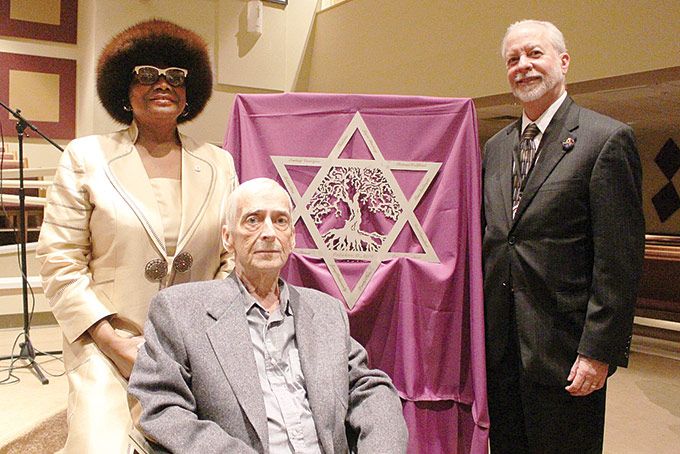
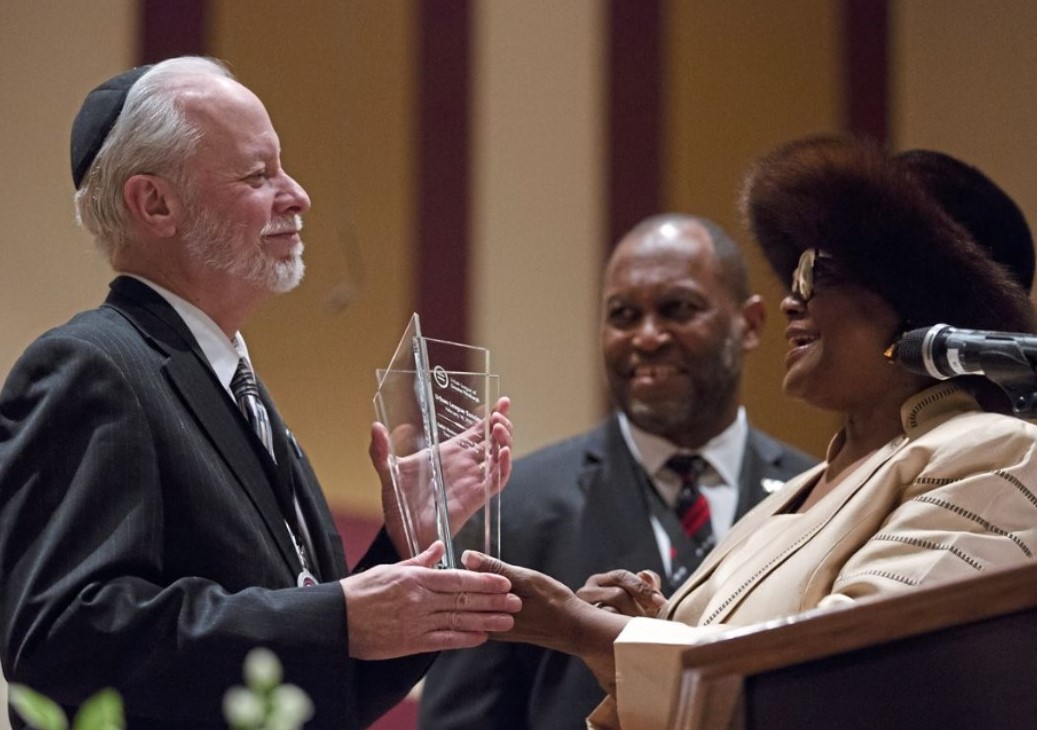
    Following Rabbi Myers’ speech, he was presented with a stainless steel sculpture — a Star of David surrounding a Tree of Life, with the names of the 11 victims engraved on it.

    It was designed by George Lampman, who lives in Edinboro, but has been staying with his daughter in Mt. Lebanon for the past three years as he receives treatment at the UPMC Hillman Cancer Center.

    Mr. Lampman, 73, already had another piece of art at the Tree of Life synagogue before the attack.

    When he heard about the shooting, he said, he knew that piece wasn’t enough.

    “I needed something different,” he said.

    Mr. Lampman plans to have the same piece made for each victim’s family.

    Ms. Bush, the president and CEO of Urban League of Greater Pittsburgh for the past 25 years, noted that this year’s message is “Getting to Equal: United Not Divided.”

    “We are truly not well as a people when we are not united,” she said. “The cure to discrimination is integration. The more we get to know one another, the more we enjoy one another.”

    She encouraged those gathered to celebrate their differences and help others to accept them.

    “The tomorrow we long for is not just going to arrive,” Ms. Bush said. “Let us live the world we envisioned.”

    Originally published 2/11/2019 Pittsburgh Post Gazettte
  • Take Charge of Your Health. Be Informed. Be Involved. … Preeclampsia and heart health

    This month, the “Take Charge of Your Health Today” page focuses on preeclampsia and heart health. Erricka Hager, health advocate, and Esther L. Bush, president and CEO, Urban League of Greater Pittsburgh, spoke about this topic.

    EH: Good afternoon, Ms. Bush. I’m excited to have this conversation with you about an issue that is negatively affecting the communities we serve. This month’s topic means a lot to me because I developed preeclampsia during my first pregnancy. Preeclampsia is a pregnancy complication with symptoms like high blood pressure, swollen hands and feet and protein in urine. If untreated, it can lead to brain seizures and a life-threatening condition called eclampsia.

    EB: Hello, Erricka. I’m glad we’re covering this topic. Research shows that African American women are more likely to experience preeclampsia during pregnancy versus their white counterparts. The rate of preeclampsia and eclampsia for African American women is 61 percent higher than it is for white women and 50 percent higher than it is for women overall, according to the Agency for Healthcare Research and Quality.

    EH: That’s important to mention because the disparity gap between African American and white women experiencing preeclampsia during pregnancy in the United States continues to grow. Researchers are trying to understand why African American women are at a higher risk of developing and then dying from preeclampsia. Historically, researchers believed that socioeconomic factors, like poverty or limited education, were the causes of the disparity. However, research has shown that these factors aren’t the only causes. Many of us know the pregnancy complications that Beyoncé and Serena Williams faced during their respective pregnancies.

    EB: Yes, you are correct. I’m glad to hear that celebrities are bringing attention to the increased pregnancy risks for African American women. Preeclampsia is such an important topic that significantly affects African American women despite their incomes or levels of education. More research is needed to understand why African American women are at an increased risk of experiencing preeclampsia. In the meantime, African American women should continue to be screened for high-risk pregnancy complications and managed as if they are going to develop preeclampsia. Unfortunately, most African American women don’t even know what preeclampsia is or know where to get information about it. That’s why it’s crucial for us to continue to have these conversations about research and health to continue to educate and empower the African American community.

    EH: I agree! I was one of those women. Before I developed preeclampsia, I had neither heard of it nor did I know what symptoms to look for during pregnancy to discuss with my doctor. When I was contacted by Dr. Catov’s research team, I was excited to participate in her study because it meant that someone was listening. Dr. Catov recognizes that preeclampsia complications could lead to future cardiovascular disease or heart issues and wants to know why. It’s important for our readers to understand that volunteering for research studies is a vital way for researchers to understand why African American women, specifically, are at a higher risk of developing preeclampsia.

    EB: Thank you so much for sharing your perspective and experience, Erricka. We’ve provided some great information and ways that readers can take charge of their health today. I look forward to chatting with you next month when we discuss poverty and asthma outcomes.

  • Urban League Sunday reinforces a unified Black and Jewish community

    Urban League Sunday reinforces a unified Black and Jewish community

    Originally published: New Pittsburgh Courier 02/14/2019
    By: Christian Morrow and J.L. Martello

    “Urban League Sunday” is the organization’s signature event during Black History Month, and while its message over 33 years has long been one of striving for togetherness, that message may not have been delivered as forcefully as it was this year by keynote speaker Rabbi Jeffrey Myers of Tree of Life/Or L’Simcha Congregation.

    This year’s event, hosted at Ebenezer Baptist Church in the Hill District, noted Urban League of Greater Pittsburgh President and CEO Esther Bush, marked her 25th year leading the organization, which just concluded its 100th year of service. Its theme for this year, set by the National Urban League, is “Getting to Equal: United, Not Divided.”

    “Unity is the result of, and the foundation for, justice and equity,” she said during the Feb. 10 service. “The cure for discrimination is integration. The more we get to know one another the more we enjoy one another. Celebrate our differences. The tomorrow we long for isn’t simply going to arrive. We have to bring it into existence.”

    Following a rousing rendition of Amazing Grace from the Impact singers and the band led by pianist and musical director Dr. Alton Merrell, Ebenezer Pastor Rev. Dr. Vincent Campbell recognized the faith leaders from other congregations, elected officials, first responders and other civic officials who attended.

    “We welcome the spirit you have brought here; the spirit of peace and unity, the spirit of hope, and the spirit of love. It is the spirit we aspire to share,” he said.

    Reverend Campbell then introduced Rabbi Myers, taking several minutes to read some of the degrees, awards and accolades he has received as a teacher and scholar over the years. But before he delivered the keynote homily, the band performed a swing-time version of “Jesus Loves Me This I Know.”

    Rabbi Myers said it was his luck to have to follow that performance. He then suggested Dr. Merrell could play for his congregation.

    “If you’re not busy on Saturday—the Jewish Sabbath. Although I can’t have a rabbi introduce ‘Jesus loves me,’” he joked. “But I’ll speak to my board. It is my honor to be here and I hope we can grow this relationship to mend the needs of our community.”

    Rabbi Myers noted that his congregation was currently studying Exodus. He spoke of slavery, of coming out of bondage, and the nature of freedom.

    “If you’ve known only slavery, being free does not mean you have the skills to lead a free life,” he asked. “Working long hours for a cruel taskmaster with no hope of a bright future may teach you how not to treat others, but it does not prepare you for a life of freedom.”

    “Are we really free today? Some of us may say our boss is a cruel taskmaster, some might be slaves to fashion, some of us worship at the altar of star athletes or celebrities, or the biggest car with the brightest bling,” he said.

    “If we could strip away these trappings and temptations, what would remain? Would we all be the same? Would you see the color of their skin or the content of their character, as Dr. King so beautifully dreamed? Would you see their sexual orientation, or their moral orientation; their political leanings or their ethical leanings? I dream for a day when someone’s color, religion, sexual orientation or political party is irrelevant. When we are stripped of the externals that divide us, we can see the internals that unite us. There are those who wish to divide us, who spew hatred and act upon it. Our abhorrence of that unites us.”

    Following the homily, Bush welcomed Maxine Plotkin of the Pittsburgh Center for the Arts, who tearfully presented a gift to Rabbi Myers and the Tree of Life congregation—a sculpture of a Star of David surrounding a Tree of Life, with the names of the 11 victims engraved on it.

    It was designed by artist George Lampman of Edinboro, who has been living with his daughter in Pittsburgh for three years while receiving treatments.

    “It was finished on Friday. I designed it based on another piece Maxine bought from me a year ago and gave it to the Tree of Life,” an emotional Lampman told the New Pittsburgh Courier. “That Saturday when I realized I had a piece of art in the synagogue and I couldn’t believe what was going on. So I started think of a new way of expressing it.”


  • Religious leaders, government officials discuss responding to hate

    Religious leaders, government officials discuss responding to hate

    By: Andrew Goldstein, Pittsburgh Post Gazette 02/14/2019

    Leaders of three different faiths whose houses of worship were struck by violence came together Wednesday night in Pittsburgh to discuss ways to combat hate.

    Rabbi Jeffrey Myers, of Tree of Life synagogue in Squirrel Hill, the Rev. Eric S.C. Manning, of Mother Emmanuel AME Church in Charelston, S.C., and Pardeep Singh Kaleka, a member of the Sikh Temple in Oak Creek, Wis., where six people were killed in 2012, took part in the “Unifying our Communities in Response to Hate” conference at the August Wilson Center, Downtown.

    Though the men came from different religions and have different backgrounds, they all hit a common theme when musing about how to bring an end to hate: education.

    Rabbi Myers talked about the education curriculum called STEM — science, technology, engineering and mathematics — and how it was later changed to STEAM, to include art. The rabbi argued that the curriculum should now be adjusted to STREAM, adding religion, so that people can learn about how certain belief systems are different — and how they are similar.

    “There is so much more that we have in common than you would realize,” Rabbi Myers said. “It’s time to take that step. I hope you’ll join me.”

    Pastor Manning echoed Rabbi Myers’ sentiments, saying that when people get to know their neighbors, they realize “there is much more that unites us than divides us.”

    “We must learn how to take care of each other,” he said. “We must learn how to treat each other with dignity and respect. We must get to know our neighbor as we know ourselves.”

    Mr. Kaleka, whose father was one of the members of the Sikh temple killed on Aug. 5, 2012, spoke on stage with Arno Michaelis, a former skinhead leader who now denounces white-supremacy.

    The two men worked together to form Serve2Unite, an organization that “diverts young people from violent extremist ideologies, gun violence, school shootings, bullying, and substance abuse, along with other forms of self-harm.”

    Mr. Michaelis spoke about escaping to world of white-supremacy. He said that his constant feeling of hatred became exhausting, and that the kindness shown to him by people of different races and religions contradicted his outlook on the world as a teenager and young man. 

    During the forum segment, led by Esther Bush, president and CEO of the Urban League of Greater Pittsburgh, the rabbi, pastor and Mr. Kaleka were joined on stage by Wasi Mohamed, executive director of the Islamic Center of Pittsburgh, and the Rev. Paul Abernathy, the CEO and director of FOCUS Pittsburgh.

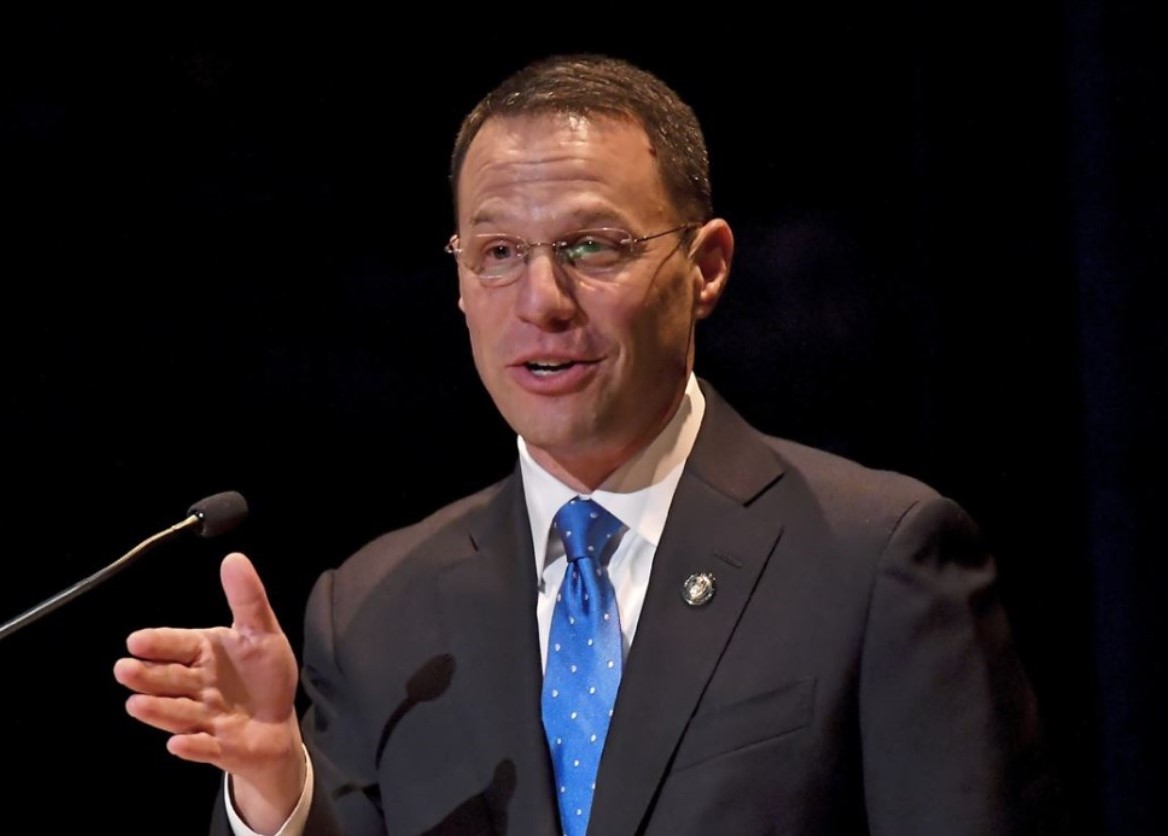
    State Attorney General Josh Shapiro also addressed the crowd of more than 100 people. 

  • Nonprofits Want More Engagement With Pittsburgh School Board Elections

    By Sarah Schneider for 90.5 WESA

    Less than 20 percent of registered voters cast ballots in the last four Pittsburgh school board elections, according to a coalition of 17 groups trying to get out the vote in the second largest school district in Pennsylvania.

    The Pittsburgh Public School District controls a $650 million budget and the nine members enact everything from policies that determine curricula, to how students are disciplined.

    There could soon be at least three new decision makers on the school board. Three of the four current members up for reelection have said they will not run.

    Voters will decide who holds seats in districts 2, 4, 6 and 8.

    The district 2 seat is held by former board president and principal Regina Holley. The district represents parts of the North Side, Highland Park, East Liberty, Lawrenceville and Bloomfield.

    Current board president Lynda Wrenn represents district 4 which includes Squirrel Hill, parts of Oakland, Point Breeze and parts of Shadyside.

    District 6 serves southern neighborhoods including Brookline, Beechview, Banksville, Mt. Washington and East Carnegie. Moira Kaleida currently holds that position.

    Kevin Carter is the only current member who sought the endorsement of the Allegheny County Democratic Committee. District 8 represents the Northside neighborhoods of Manchester, Northview Heights and California-Kirkbride as well as parts of the Hill District and Downtown.

    Potential school board candidates that live in those districts are only required to collect 10 signatures to get on the ballot.  

    Esther Bush represents one of the partner organizations, the Urban League of Greater Pittsburgh. She said she hopes potential candidates know the difference between equity and equality when trying to make change in a district with a history of academic achievement gaps.

    “I want to know that they understand the distribution of thinking, resources, etc. are different per community. And to find out the why and make adjustments,” she said.

    James Fogarty, executive director of education-advocacy group A-Plus Schools, said he wants board members focused on equity and committed to quality.

    “Are they monitoring data and understanding how to use their position as an oversight body for the school district to really help the superintendent and his staff think critically about some of the ways in which they are educating students and how they can be helpful in that,” he said.

    The coalition is hosting a candidates’ forum in April and will also distribute a voter’s guide. The primary election is May 21.